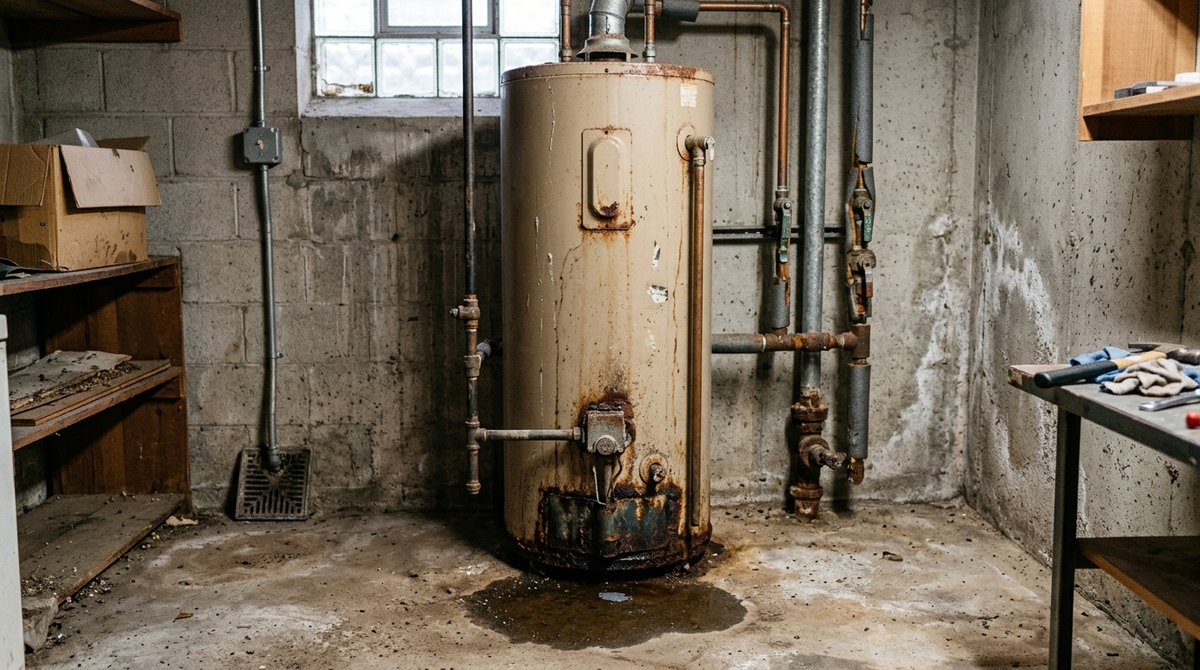
If your water heater is leaking, shut off the cold water valve above the tank, then cut the power. Switch off the breaker on an electric heater, or turn the gas control to off on a gas one. Then find where the water is coming from and call a plumber. A leak from the tank body means the tank needs replacing.
Why quick action matters
A small leak can turn into a large one without warning. A tank that holds 40 to 50 gallons can empty onto the floor, and water can reach drywall, flooring and stored belongings. Even a slow drip can rot a wall base or feed mold over time.
Staying calm helps. The steps below take a few minutes, and most need no tools. They protect your home while you wait for a plumber.
If you smell gas at any point, leave the home and call your gas utility from outside. Do not turn lights or appliances on or off.
Step 1: Shut off the water to the tank
Look above the heater for a pipe with a valve or handle on the cold water line. That is the cold water supply. Turn the handle clockwise until it stops. A lever handle turns a quarter turn, so it ends up crosswise to the pipe.
If you cannot find the valve, or it will not turn, shut off the main water valve for the house. It is usually where the water line enters the home. In Utah, that is often in a basement, a utility room, a garage wall or near the heater. Find it now, before you ever need it. Test that it turns once a year.
Step 2: Cut the power or gas
This step protects you and the heater.
- Electric heater: switch off its breaker at the panel, because elements can burn out as the water level drops.
- Gas heater: turn the gas control knob to off. Do not light it again until the leak is fixed.
If the floor is wet around an electric heater or the panel, do not step into the water. Stay clear and call a plumber or an electrician.
Step 3: Find where the water is coming from
Not every puddle means the tank is dead. Dry the area, then look carefully. These are the common sources:
- The top of the tank. Loose pipe fittings can drip down the side. Often they can be tightened or replaced.
- The relief valve. This safety valve has a pipe down the side. A drip can mean high pressure or heat.
- The bottom valve. The valve near the base can leak from a worn washer or cap.
- The bottom of the tank. Water coming from underneath, or from the tank body, means the steel has failed.
- Condensation. Cold water in a warm room can make the tank sweat. It dries out.
Take photos of what you see. They help a plumber give you better advice by phone.
Step 4: Protect your home
While the leak is stopped, limit the damage.
- Move boxes and belongings away from the wet area.
- Soak up standing water with towels or a wet-dry vacuum.
- Run a fan to dry the area, and open a window if the weather allows.
- Place a bucket under a slow drip.
- Take photos for your records, in case an insurance claim is needed.
Check nearby walls and flooring in the next days. Damp drywall or a musty smell means the area needs more drying.
Repair or replace
What the plumber finds decides it.
- Replace when the tank body leaks, or an old tank has other problems. A body leak cannot be patched.
- Repair when a fitting or valve leaks and the tank is otherwise sound.
Most tank heaters last 8 to 12 years. Hard water, which is common in Utah, adds scale and sediment that wear a tank down sooner. Our guide to signs you need a water heater replacement explains the age label and the other warning signs.
What a replacement involves and what it costs
A typical swap runs like this: the old tank is shut off, emptied and disconnected, the new tank is set and connected, the venting is checked, and the tank is filled and tested. Like-for-like swaps often take a few hours. Moving the heater or changing the fuel takes longer.
We do not give prices without seeing the job. These factors move the cost:
- Tank size.
- Fuel type and connections.
- Access to the heater.
- Venting condition and code updates.
- Removing the old tank.
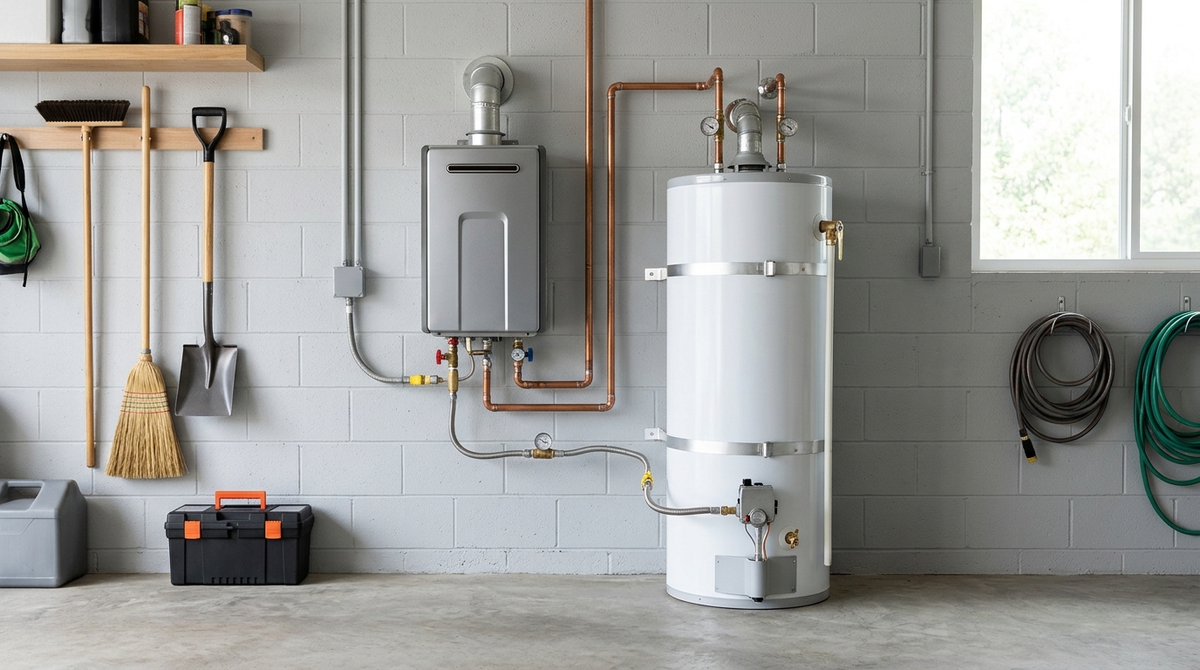
Ask for the quote in writing, with the tank, labor and any code updates listed separately. If you are weighing a tankless unit instead, read our guide to tank and tankless water heaters. Many Utah cities ask for a permit on a water heater swap, so check with your building office.
What not to do
A few common mistakes make a leak worse.
- Do not ignore it. A slow drip is a warning, not a nuisance.
- Do not cap the relief valve pipe. That valve is a safety device.
- Do not leave the power on with a tank that is losing water.
- Do not relight a gas heater that has been leaking.
- Do not reach into standing water near electrical connections.
When to call a professional
Call a plumber for any leak from the tank, a dripping relief valve, and any heater you are unsure about. Anything involving gas, venting or electrical connections should not be a do-it-yourself job.
You can do the safe steps yourself: shutting off the water and the power, drying the area and taking photos. Leave the repair and the swap to a plumber.
Homes in Park City and Snowbird face another risk. A heater in an unheated space can freeze and split in a cold snap, and a place that sits empty can leak for days. If you own a second home, ask us about shutting down the water before winter. Our page on plumbing repairs covers other common leaks.
Need a Plumber in Salt Lake City? Mattos Express Plumbing Is Ready to Help
We are a family-owned company serving homeowners and builders along the Wasatch Front. Once the water is off, call or text us with photos and what you see, and we will tell you what the next step involves. Our water heater installation in Salt Lake City page explains how a swap works.
Call us at (385) 395-4211 or send us a message with your photos.