If you see white crust on faucets and spots on glasses, you have a hard water problem, and a water softener is the tool for it. If your complaint is taste, smell or grit, you need a filter. A filter does not remove hardness. Many Utah homes use both, because they solve different problems.
Why this matters for Utah homes
Hard water is common across Utah, though how hard it is varies by supplier and by part of town. Hardness comes from dissolved minerals, mainly calcium and magnesium. They are not a health concern for most people, but they are hard on plumbing.
When hard water dries or heats, those minerals stay behind as scale. Scale narrows faucet openings, coats heating parts and settles in the bottom of a water heater. Over the years it shortens the life of fixtures and appliances.
People often buy the wrong product because the two words get mixed up. This guide sorts out which is which, so you spend money on the right fix.
Signs of hard water
Hard water shows itself in small ways before it causes real damage. Look for these:
- White crust on faucets and shower heads.
- Spots on glasses and dishes after washing.
- Soap that does not lather well.
- Low flow at faucets and showers.
- A chalky film inside the kettle or coffee maker.
- A water heater that rumbles or heats poorly.
- Towels and clothes that feel stiff.
One sign alone proves little. Several together point strongly to hard water. A quick test confirms it.
How to test your water
There are three easy steps.
- Read your supplier's report. Suppliers publish a yearly water quality report. It shows what is tested and treated.
- Use a test strip or kit. Hardware stores sell hardness test strips. They give a rough number in minutes.
- Ask for a lab test. It covers what your pipes add on the way. It costs more but is thorough.
A plumber can also test hardness during a visit. Write the number down. It is what a softener is sized to.
What a water softener does
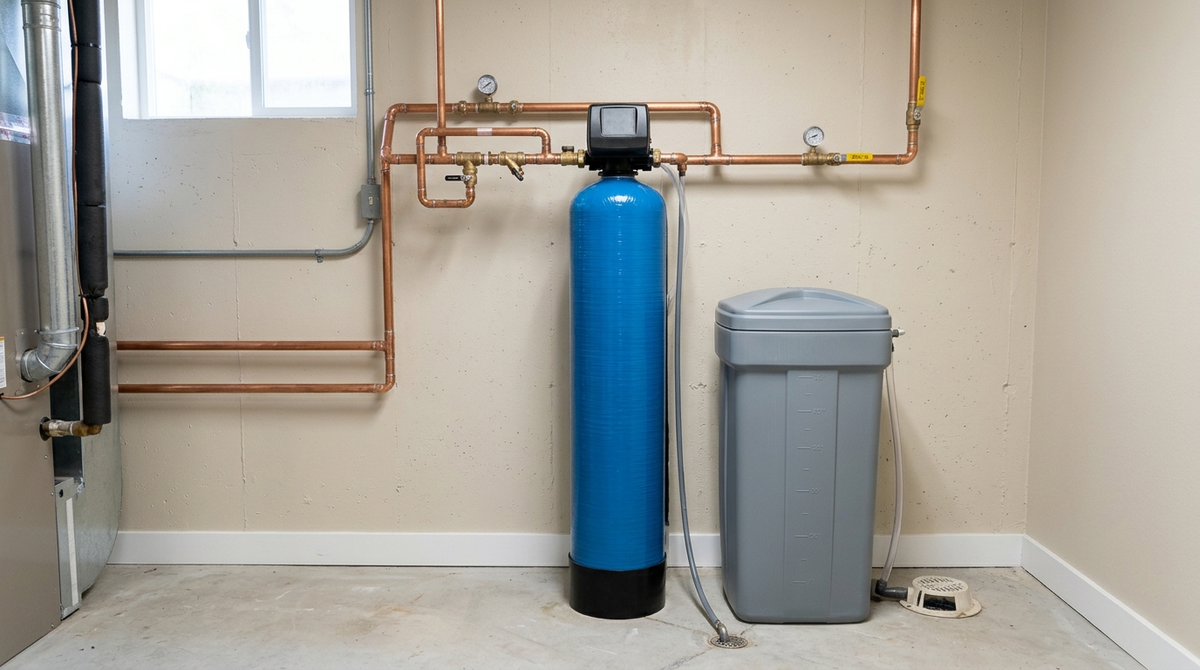
A softener removes the minerals that cause hardness. Water passes through a bed of small resin beads that hold sodium or potassium. As water flows past, the beads swap the hard minerals for sodium or potassium. The water that leaves is soft.
How the cleaning cycle works
Over time the beads fill up. The system then runs a cleaning cycle with a salt solution to reset them. That is why salt-based systems need salt added every few weeks to a couple of months, depending on size and use.
What you get:
- Less scale on fixtures and appliances.
- Soap that lathers better.
- A water heater that is protected from scale buildup.
- Cleaner glass and shower doors.
Things to know:
- Salt-based softeners add a small amount of sodium. Anyone on a low-sodium diet should ask a doctor.
- Some people notice soft water tastes slightly different. Many keep a separate kitchen filter for drinking water.
- Salt-free systems work differently and do not remove hardness the same way. Ask what one does before you buy.
What a water filter does
A filter catches or reduces things in the water. The type matters.
- Sediment filters catch grit and particles.
- Carbon filters reduce chlorine taste and odor.
- Specialty media target other problems.
No single filter removes everything, and none removes hardness. Choose one for the problem you named. A kitchen filter improves the water you drink and cook with. A whole-house filter treats every tap, shower and appliance.
Filters need new cartridges. Most last from a few months to a year, depending on type and use. Ask what cartridges cost and how often they change, because upkeep is part of the real price.
Softener or filter: how to choose
Match the product to the complaint.
- White scale, spots, stiff laundry: softener.
- Chlorine taste or smell: carbon filter.
- Grit or sand in faucet screens: sediment filter.
- A tankless water heater or a hard-working tank: softener, to protect the unit from scale.
- Both scale and taste problems: both, on the same main line, usually with the filter first.
If you are not sure what is wrong, test first. A hardness number and your supplier's report usually make the choice obvious.
What affects cost and where it goes
Prices depend on the system, so we do not quote without seeing the home. These factors matter:
- Size. Harder water and bigger households need a higher-capacity softener.
- System type. Salt-based and salt-free systems differ in cost and in what they do.
- Location. A short run from the main line is quicker than a long one.
- Wastewater connection. Softeners discharge during cleaning cycles, so they need a proper connection.
- Bypass valves. These let you shut the unit off without shutting off your water.
- Pairing with a filter. Two systems mean more equipment and install time.
Plan for running costs too. Salt for a softener and cartridges for a filter are repeat purchases. Ask for a quote that lists equipment, labor and expected upkeep separately. Many homes put the unit in a basement, garage or utility room near the main line. Check association rules first if you live in a condo or townhome.
You can read about water softener installation in Salt Lake City and water filtration systems for how each job runs.
When to call a professional
Testing your water and reading the report are easy to do yourself. Installing a softener or filter means cutting into the main water line, so it is a plumber's job. The main line is shut off during the work, and a bad connection can leak.
Call a plumber if your water is discolored, smells bad or has changed suddenly. That is a different problem from hardness, and a filter may not be the answer.
Need a Plumber in Salt Lake City? Mattos Express Plumbing Is Ready to Help
We are a family-owned company serving homeowners and builders along the Wasatch Front. We can test your water, explain what the number means and install a softener, a filter or both. See our water filtration in Salt Lake City page for more.
Call us at (385) 395-4211 or send us a message and tell us what you see at your taps.